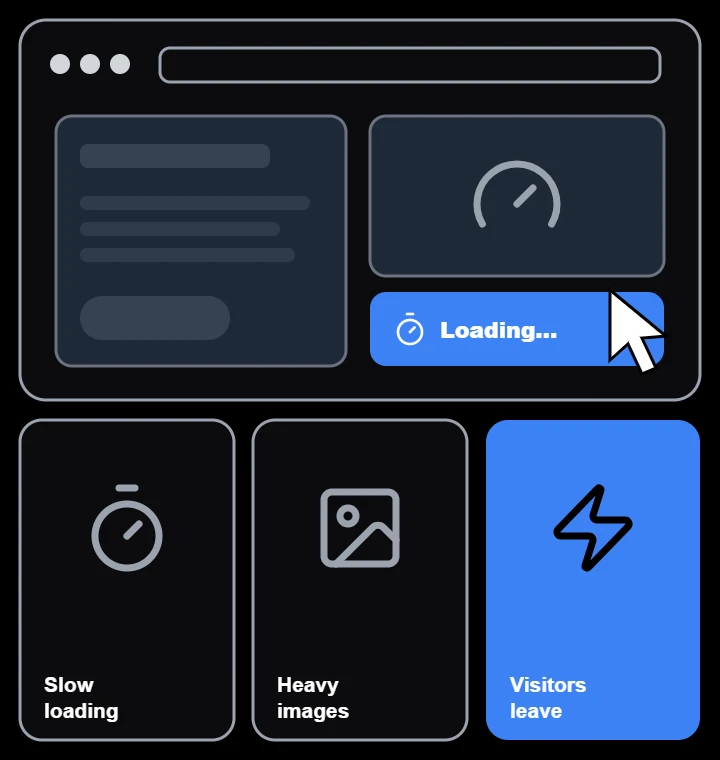
Slow pages frustrate visitors, hurt search rankings and lower conversions. Speed fixes all three.
Keep visitors engaged.
Fast pages hold attention, so more people read your content and take action.
Rank higher.
Page experience is part of how Google ranks pages, and speed is a big part of it.
Convert more.
A quicker, smoother site turns more visits into calls, bookings and sales.
53%
of mobile site visits are abandoned when a page takes longer than 3 seconds to load.
Source: Google
2.5s
The Largest Contentful Paint time Google considers good for real visitors.
Source: Google Core Web Vitals
200ms
The Interaction to Next Paint target for a page that feels quick to respond.
Source: Google Core Web Vitals
What makes a website fast
We tune four key areas that decide how quickly your pages load and respond.
Area 1
Assets
Compressed WebP images, efficient fonts and properly sized media.
Area 2
Code
Minified, deferred and cleaned-up CSS and JavaScript that doesn’t block the page.
Area 3
Server
Fast hosting, caching and a CDN that serve pages close to your visitors.
Area 4
Experience
Stable layouts and quick responses that pass all Core Web Vitals.
Real speed gains, not just a higher score.
We focus on what real visitors experience, using field data and lab testing together. Every change is tested, so your site gets faster without breaking design or features.
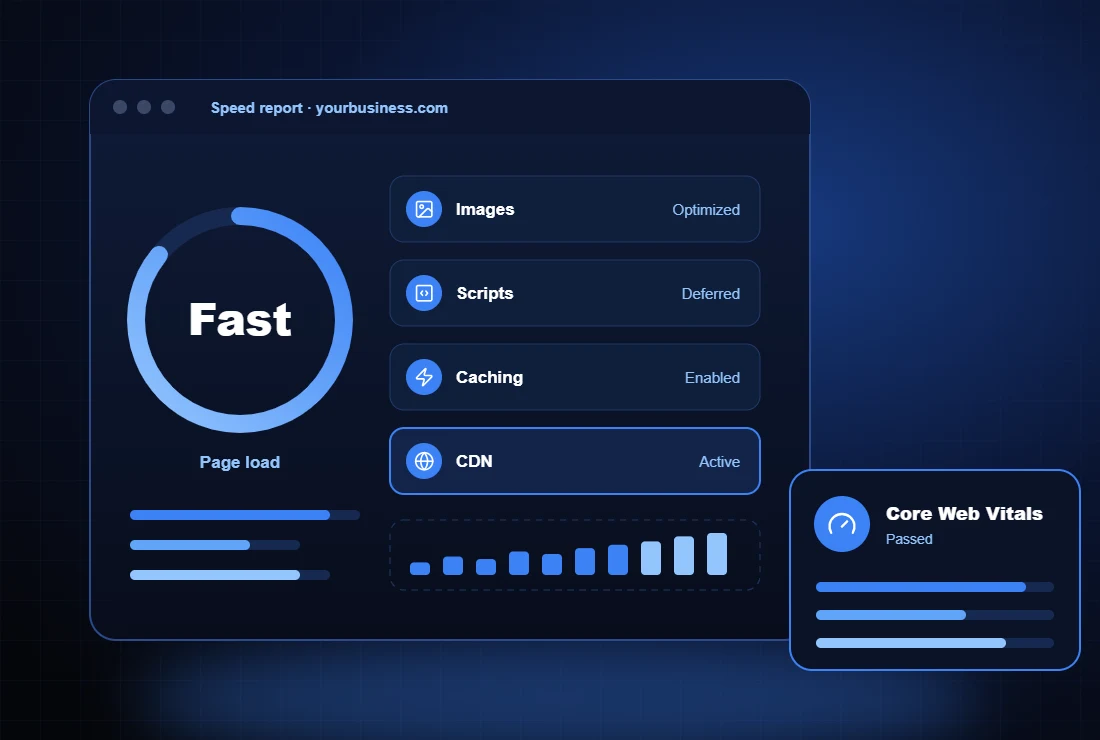
Core Web Vitals passed for real users
Images converted to WebP and lazy loaded
Caching, minification and CDN configured
Unused plugins and scripts removed safely
How we speed up your website
Step 1
Test
We measure speed and Core Web Vitals on mobile and desktop.
Step 2
Diagnose
We find what slows your pages, from images to scripts to hosting.
Step 3
Optimize
We fix the issues and test every page so nothing breaks.
Step 4
Monitor
We track performance over time and catch slowdowns early.
Signs your website is too slow.
If any of these sound familiar, speed may be costing you leads.
Pages take more than a few seconds to load
Google Search Console flags Core Web Vitals issues
Faster pages keep visitors engaged, improve conversions and support search rankings, because page experience is part of how Google evaluates websites.
What are Core Web Vitals?
Core Web Vitals are Google’s metrics for loading speed (LCP), responsiveness (INP) and visual stability (CLS). Passing them means real visitors get a good experience.
Will speed optimization change my design?
No. We keep your design and content the same and focus on how the site is built and delivered behind the scenes.
How long does optimization take?
Most websites are audited and optimized within one to two weeks, depending on the size of the site and the issues found.
Do I need new hosting?
Not always. We improve your current setup first and only recommend a hosting change if it is holding your site back.
Can you keep my site fast over time?
Yes. Our ongoing plans include monitoring, reporting and tuning as you add new pages and features.
Client Connect
Connect Right Now
Tell us about your business. We’ll reply in real time by text or email.
Here’s what you’ll learn
Write a message that gets noticed
Build a customer database fast
Cut your budget, not your sales
Follow up with leads automatically
Why free offers still win customers
Why most firms overspend online
“Excellent little book. I learned a ton about areas I was missing in my business.” D. Morrison, Amazon review
Free Marketing Book
Get your free copy.
Enter your details and we’ll email you The Four Step Marketing Blueprint, the marketing guide your competition hopes you’ll never read.